
More Than A Carpenter
Mark 6:1-6
Going through Mark, we are looking at the key question: who is Jesus? This really is the emphasis in the early chapters of Mark, and we can get a sense of why God would belabor this point to us—this question, who is Jesus?
For a long time, people have noticed that there’s a pattern that comes out through Mark. This is the way David Garland presents it in his commentaries and it has really helped me.
For a long time, people have noticed that there’s a pattern that comes out through Mark. This is the way David Garland presents it in his commentaries and it has really helped me.
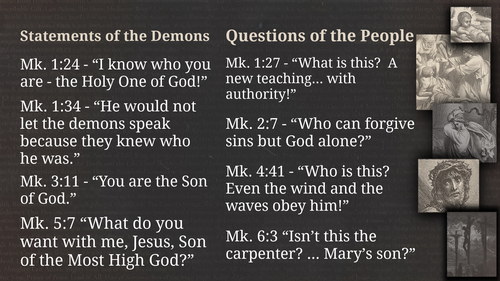
Okay, so in chapter 1, verse 24—in the synagogue, a demon-possessed man bursts in suddenly and he says, “I know who you are, the Holy One of God. I know who you are, the Holy One of God.”
Just a few verses later, in verse 27, the people who were there, who heard Jesus’ teaching, they’ve seen his power to cast out an unclean spirit, and they ask, “What is this? A new teaching—and with authority.”
Just a little bit later, you get to verse 34, and it says he would not let the demons speak because they knew who he was. But then right after that, you have the religious leaders wondering about who Jesus is. Jesus forgave a man his sins, and they say, “Who can forgive sins but God alone?”
Move forward a bit. Chapter 3, verse 11—you have the unclean spirits confessing, “You are the Son of God.” It’s very clear. You are the Son of God.
But then not too long after, in chapter 4, the disciples are asking, “Who is this that even the wind and the waves obey him?” Seeing a pattern here?
Chapter 5, verse 7, there is the man tormented by a legion of demons saying, “What do you want with me, Jesus, Son of the Most High God?”
And then we get to chapter 6, verse 3, and the people are saying, “Isn’t this the carpenter, Mary’s son?” In other words: Where did this man get these things? What is this wisdom that’s been given to him? How are these miracles performed by his hands?
What’s my point? The demons can see who Jesus is. They know. But the people Jesus came to reach are standing around scratching their heads. They’re wondering - Who is this guy? What’s the deal?
It would be funny if it weren’t so tragic, because many people in Mark don’t answer their own questions. They don’t come to know who Jesus is. Even though over and over again we see people posing the question, “Who is Jesus?” and they often don’t come to a conclusion.
Even some of the people who are closest to Jesus—in fact, rather than see Jesus for who he is, they end up offended by him. And that’s the tragedy of Mark 6:1-6, that some of the people who potentially would have been most familiar with Jesus, instead of being drawn to him, they are repelled.
It’s tragic, but it’s here to point us to the truth—some would argue the central truth that Mark’s gospel is here to help people see. Robert Gundry, who’s written one of the better commentaries on Mark, argues that Mark wrote this gospel to “Rescue people from falling into the trap of being offended by Jesus.”
The woman who was healed with the issue of blood—what was the issue Jesus wanted her to know made the difference in her being healed? Faith. With Jairus, what was the one thing Jesus told him to do? He said, “Don’t be afraid. Only believe.” He’s saying trust me, Jairus. That’s all I’m asking you to do. These other people didn’t believe. They didn’t reach out in faith.
Don’t misinterpret this to mean Jesus didn’t have the power. Faith is how we lay hold of Jesus. We come to him by faith. God is able to do whatever he wants. The issue is that the people here won’t come to him. They won’t trust him. They have an astounding lack of faith.
In fact, look at verse six. It says, “And he was amazed at their unbelief.” Don’t take this the wrong way, but I think it takes a lot to impress God—to amaze Jesus. There are two places in the Gospels where it says Jesus is amazed.
The first place where we hear that Jesus is amazed is when the centurion comes to Jesus and asks Jesus to heal his servant. Jesus offers to come to his house, and the centurion replies, "I'm not worthy for you to come to my house. I'm not worthy for you to come under my roof.” The centurion trusts Jesus is someone with such authority that all Jesus has to do is say the word. Just say the word it'll be done. And we're told Jesus marveled at his faith.
The second place Jesus marveled is in 5:6. But here it is for their lack of faith. He's amazed at their unbelief.
You know what isn't astonishing? Failure is not astonishing. Weakness is not astonishing. Sin is it's not surprising. But you know what is surprising? The stubborn, hard-hearted refusal to trust God. After all these people have seen, they still don't believe.
What do we do with this? What can we learn from this? What is the truth here that we need to take home with us?
Well, the truth is Jesus is more than a carpenter. They didn't see that. It doesn't seem they wanted to see that. They were offended by him and so they wouldn't trust him. And we need to understand why so that we can see that this danger applies to us as well.
Ignorant familiarity.
There is a danger that Jesus would become familiar to us without seeing him for who he really is—to assume that because we’ve seen Jesus in one light, we’ve got him all figured out.
It’s been said that we are living in a post-Christian society. Have you ever heard of it? Here’s part of it: post-Christian is not the same as non-Christian. A non-Christian culture doesn’t know Jesus or what it means to follow Jesus, and a post-Christian society also doesn’t know Jesus or what it means to follow Jesus—but they think they do.
The mark of a post-Christian is, “I already know. I’ve heard it all before. I’ve got it figured out.” They may pose questions like the people do here in Mark, but they don’t stick around to get the real answer. Usually in a post-Christian society, you you'll hear lots about Jesus, but it's mostly like the folks here. He's just a carpenter. He's just Mary's son, nothing more.
So, how do we avoid ignorant familiarity? For starters, don't settle until you have wrestled through the claims this book makes about Jesus. Don't settle until you get a clear answer to the question these people asked here.
Where did Jesus get these things?
Where does a carpenter from Nazareth get the power and the wisdom to change the world?
There are libraries-worth of books written on that question and we could dive into the weeds on all the intricacies, all the explanations, all the possibilities, and all the things that people have said. Many people have tried to account for Jesus's impact in the world. But consider this though, the unanimous testimony of the Bible is that Jesus Christ is the son of God, the one who made you and everything that exists. So, if the God who made you is behind all of this, a reasonable place to start is to ask him to move you to open your eyes. Ask him, “God, help me see who Jesus is.” And I tell you, he will. That is a prayer God honors.
Just a few verses later, in verse 27, the people who were there, who heard Jesus’ teaching, they’ve seen his power to cast out an unclean spirit, and they ask, “What is this? A new teaching—and with authority.”
Just a little bit later, you get to verse 34, and it says he would not let the demons speak because they knew who he was. But then right after that, you have the religious leaders wondering about who Jesus is. Jesus forgave a man his sins, and they say, “Who can forgive sins but God alone?”
Move forward a bit. Chapter 3, verse 11—you have the unclean spirits confessing, “You are the Son of God.” It’s very clear. You are the Son of God.
But then not too long after, in chapter 4, the disciples are asking, “Who is this that even the wind and the waves obey him?” Seeing a pattern here?
Chapter 5, verse 7, there is the man tormented by a legion of demons saying, “What do you want with me, Jesus, Son of the Most High God?”
And then we get to chapter 6, verse 3, and the people are saying, “Isn’t this the carpenter, Mary’s son?” In other words: Where did this man get these things? What is this wisdom that’s been given to him? How are these miracles performed by his hands?
What’s my point? The demons can see who Jesus is. They know. But the people Jesus came to reach are standing around scratching their heads. They’re wondering - Who is this guy? What’s the deal?
It would be funny if it weren’t so tragic, because many people in Mark don’t answer their own questions. They don’t come to know who Jesus is. Even though over and over again we see people posing the question, “Who is Jesus?” and they often don’t come to a conclusion.
Even some of the people who are closest to Jesus—in fact, rather than see Jesus for who he is, they end up offended by him. And that’s the tragedy of Mark 6:1-6, that some of the people who potentially would have been most familiar with Jesus, instead of being drawn to him, they are repelled.
It’s tragic, but it’s here to point us to the truth—some would argue the central truth that Mark’s gospel is here to help people see. Robert Gundry, who’s written one of the better commentaries on Mark, argues that Mark wrote this gospel to “Rescue people from falling into the trap of being offended by Jesus.”
The woman who was healed with the issue of blood—what was the issue Jesus wanted her to know made the difference in her being healed? Faith. With Jairus, what was the one thing Jesus told him to do? He said, “Don’t be afraid. Only believe.” He’s saying trust me, Jairus. That’s all I’m asking you to do. These other people didn’t believe. They didn’t reach out in faith.
Don’t misinterpret this to mean Jesus didn’t have the power. Faith is how we lay hold of Jesus. We come to him by faith. God is able to do whatever he wants. The issue is that the people here won’t come to him. They won’t trust him. They have an astounding lack of faith.
In fact, look at verse six. It says, “And he was amazed at their unbelief.” Don’t take this the wrong way, but I think it takes a lot to impress God—to amaze Jesus. There are two places in the Gospels where it says Jesus is amazed.
The first place where we hear that Jesus is amazed is when the centurion comes to Jesus and asks Jesus to heal his servant. Jesus offers to come to his house, and the centurion replies, "I'm not worthy for you to come to my house. I'm not worthy for you to come under my roof.” The centurion trusts Jesus is someone with such authority that all Jesus has to do is say the word. Just say the word it'll be done. And we're told Jesus marveled at his faith.
The second place Jesus marveled is in 5:6. But here it is for their lack of faith. He's amazed at their unbelief.
You know what isn't astonishing? Failure is not astonishing. Weakness is not astonishing. Sin is it's not surprising. But you know what is surprising? The stubborn, hard-hearted refusal to trust God. After all these people have seen, they still don't believe.
What do we do with this? What can we learn from this? What is the truth here that we need to take home with us?
Well, the truth is Jesus is more than a carpenter. They didn't see that. It doesn't seem they wanted to see that. They were offended by him and so they wouldn't trust him. And we need to understand why so that we can see that this danger applies to us as well.
Ignorant familiarity.
There is a danger that Jesus would become familiar to us without seeing him for who he really is—to assume that because we’ve seen Jesus in one light, we’ve got him all figured out.
It’s been said that we are living in a post-Christian society. Have you ever heard of it? Here’s part of it: post-Christian is not the same as non-Christian. A non-Christian culture doesn’t know Jesus or what it means to follow Jesus, and a post-Christian society also doesn’t know Jesus or what it means to follow Jesus—but they think they do.
The mark of a post-Christian is, “I already know. I’ve heard it all before. I’ve got it figured out.” They may pose questions like the people do here in Mark, but they don’t stick around to get the real answer. Usually in a post-Christian society, you you'll hear lots about Jesus, but it's mostly like the folks here. He's just a carpenter. He's just Mary's son, nothing more.
So, how do we avoid ignorant familiarity? For starters, don't settle until you have wrestled through the claims this book makes about Jesus. Don't settle until you get a clear answer to the question these people asked here.
Where did Jesus get these things?
Where does a carpenter from Nazareth get the power and the wisdom to change the world?
There are libraries-worth of books written on that question and we could dive into the weeds on all the intricacies, all the explanations, all the possibilities, and all the things that people have said. Many people have tried to account for Jesus's impact in the world. But consider this though, the unanimous testimony of the Bible is that Jesus Christ is the son of God, the one who made you and everything that exists. So, if the God who made you is behind all of this, a reasonable place to start is to ask him to move you to open your eyes. Ask him, “God, help me see who Jesus is.” And I tell you, he will. That is a prayer God honors.
GOING DEEPER
Parallel, Related and Referenced Passages
Parallel Accounts: Matthew 13:53–58, Luke 4:16–22
1) TRAGEDY (in Nazareth)
2) TRUTH (for Us)
IGNORANT FAMILIARITY
ACCOUNTABILITY
HUMILITY
THE CROSS
Parallel, Related and Referenced Passages
Parallel Accounts: Matthew 13:53–58, Luke 4:16–22
1) TRAGEDY (in Nazareth)
- Isaiah 61:1–2 – “The Spirit of the Lord is on me…”
- Mark 5:34 – “Your faith has healed you.”
- Mark 5:36 – “Don’t be afraid; just believe.”
- Matthew 8:10 – Jesus marvels at the centurion’s faith.
2) TRUTH (for Us)
IGNORANT FAMILIARITY
- Isaiah 53:1-4 – The Messiah, despised and rejected
- John 1:10-13 – Jesus rejected by His own, but received by faith
ACCOUNTABILITY
- Acts 4:12 – Salvation in no one else.
- Philippians 2:9–11 – Every knee will bow to Jesus.
HUMILITY
- 2 Kings 5:1–14 – Naaman’s humility and healing.
- Philippians 2:5–8 – Jesus humbled Himself to death on a cross.
- James 4:6 – “God opposes the proud but gives grace to the humble.”
- 1 Peter 5:6 – “Humble yourselves under God’s mighty hand…”
THE CROSS
- Mark 8:31 – Jesus predicts His suffering and death.
- Mark 15:25–27 – Jesus crucified.
- 1 Corinthians 1:23 – “Christ crucified: a stumbling block to Jews and foolishness to Gentiles.”
- Galatians 6:14 – “May I never boast except in the cross of our Lord Jesus Christ.”
- Romans 5:8 – Christ died for us while we were sinners.
- 1 Peter 2:24 – “He himself bore our sins in his body on the tree…”
Posted in Going Deeper
Recent
Archive
2026
March
April
2025
April
May
August
October
No Comments